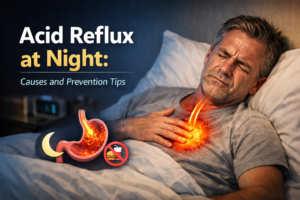
Acid reflux is a common digestive problem that affects millions of people. While many experience acidity during the day, nighttime acid reflux can be more uncomfortable and disruptive. Waking up with a burning sensation in the chest, a sour taste in the mouth, or throat irritation can affect sleep quality and overall health.
Many people initially try home remedies or over-the-counter antacids. However, when symptoms become frequent, it is important to seek proper medical evaluation. Many patients begin by searching for stomach hospitals near me, especially when reflux starts disturbing sleep regularly. In some cases, chronic reflux may also involve liver-related digestive issues, making consultation with a dr liver specialist helpful.
Understanding the causes of nighttime acid reflux and learning effective prevention strategies can help protect your digestive health.
What Is Nighttime Acid Reflux?
Acid reflux occurs when stomach acid flows backward into the esophagus (food pipe). This happens when the lower esophageal sphincter, a muscle that normally prevents acid from moving upward, becomes weak or relaxed.
At night, this condition can worsen because:
-
You are lying down
-
Gravity no longer helps keep acid in the stomach
-
Digestion slows during sleep
These factors allow acid to move more easily into the esophagus.
Common Symptoms of Nighttime Acid Reflux
People experiencing nighttime reflux often notice:
-
Burning sensation in the chest
-
Sour or bitter taste in the mouth
-
Frequent coughing at night
-
Difficulty sleeping
-
Throat irritation or hoarseness
-
Feeling of food coming back up
If symptoms persist frequently, visiting trusted stomach hospitals near me for evaluation is recommended.
Causes of Acid Reflux at Night
Several lifestyle and medical factors can trigger reflux during sleep.
1. Late-Night Eating
Eating heavy meals just before bedtime is one of the most common causes of nighttime acidity.
When you lie down immediately after eating, digestion slows and stomach acid can flow upward more easily.
2. Fatty or Spicy Foods
Certain foods increase acid production and relax the lower esophageal sphincter.
Common triggers include:
-
Fried foods
-
Spicy dishes
-
Chocolate
-
Citrus fruits
-
Tomato-based foods
-
Carbonated drinks
Reducing these foods may help prevent reflux.
3. Obesity and Excess Weight
Excess body weight increases pressure on the abdomen, pushing stomach acid toward the esophagus.
Weight management plays an important role in preventing acid reflux.
4. Stress and Anxiety
Stress affects digestion and increases stomach acid production. Many people notice worsening reflux symptoms during stressful periods.
5. Liver and Digestive Health Issues
The liver helps regulate digestion and fat metabolism. Conditions such as fatty liver can contribute to digestive imbalance, worsening reflux symptoms.
If reflux occurs alongside fatigue or right-sided abdominal discomfort, consulting a liver specialist doctor near me may be necessary.
Prevention Tips for Nighttime Acid Reflux
Fortunately, several simple lifestyle changes can significantly reduce nighttime reflux.
Maintain Proper Meal Timing
-
Eat dinner at least 2–3 hours before bedtime
-
Avoid large late-night meals
-
Choose lighter evening meals
Adjust Sleeping Position
-
Elevate the head of your bed slightly
-
Use a wedge pillow if necessary
-
Avoid lying completely flat immediately after eating
Maintain a Healthy Weight
Weight loss can reduce pressure on the stomach and improve reflux symptoms.
Limit Trigger Foods
Try to reduce foods that commonly trigger reflux, such as:
-
Fried and oily foods
-
Spicy meals
-
Coffee and tea late at night
-
Alcohol
-
Carbonated drinks
Manage Stress
Practicing relaxation techniques can improve digestion.
Helpful strategies include:
-
Deep breathing exercises
-
Meditation
-
Regular physical activity
-
Proper sleep routines
When to See a Doctor
Occasional reflux is common, but frequent nighttime symptoms may indicate GERD (Gastroesophageal Reflux Disease).
You should seek medical attention if:
-
Acid reflux occurs several times a week
-
Sleep is regularly disturbed by acidity
-
You experience difficulty swallowing
-
There is unexplained weight loss
-
Symptoms do not improve with medication
In such cases, evaluation at trusted stomach hospitals near me is recommended.
How Doctors Diagnose Chronic Acid Reflux
Doctors may recommend the following tests:
-
Upper endoscopy
-
pH monitoring
-
Esophageal manometry
-
Ultrasound or liver function tests if digestive imbalance is suspected
If liver involvement is detected, referral to a dr liver specialist may be necessary.
Long-Term Complications of Untreated Acid Reflux
Ignoring persistent reflux can lead to:
-
Esophagitis (inflammation of the esophagus)
-
Esophageal ulcers
-
Narrowing of the esophagus
-
Barrett’s esophagus (precancerous condition)
Early treatment helps prevent these complications.
FAQs
Q1. Why is acid reflux worse at night?
Lying down reduces the effect of gravity and allows stomach acid to move into the esophagus more easily.
Q2. Can fatty liver worsen acid reflux?
Yes. Liver-related digestive imbalance can contribute to reflux symptoms.
Q3. Are antacids safe for daily use?
Occasional use is safe, but frequent reliance on antacids should be evaluated by a doctor.
Q4. Should I visit a liver specialist for reflux?
If reflux is accompanied by liver symptoms or abnormal tests, consulting a dr liver specialist is recommended.
Q5. Can lifestyle changes really reduce reflux?
Yes. Diet changes, weight management, and proper sleep posture can significantly improve symptoms.
Final Thoughts
Nighttime acid reflux is more than just a minor discomfort—it can significantly affect sleep and long-term digestive health. Identifying triggers and making simple lifestyle changes can help prevent frequent reflux episodes.
However, if symptoms persist despite lifestyle adjustments, it is important to seek medical care. Visiting trusted stomach hospitals near me and consulting a qualified liver specialist doctor near me ensures proper diagnosis and effective treatment for lasting digestive health.