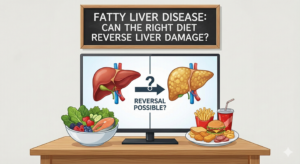
Fatty liver disease is becoming one of the most common health problems today. Many people are surprised when their reports show fatty liver because they feel “mostly fine.” But the liver is a silent organ. Damage can grow quietly unless you act on time.
The good news is this: in many cases, fatty liver disease can be reversed with the right diet and lifestyle changes. You don’t always need medicines first. What you eat daily plays a powerful role in healing your liver.
What Is Fatty Liver Disease?
Fatty liver disease happens when excess fat builds up in liver cells. This can slow down liver function and, if ignored, may lead to inflammation, scarring, or even liver failure.
There are two main types:
- Non-Alcoholic Fatty Liver Disease (NAFLD) – linked to obesity, diabetes, poor diet, and inactivity
- Alcoholic Fatty Liver Disease – caused by long-term alcohol use
Most people today suffer from NAFLD due to modern food habits and sedentary lifestyles.
Can Diet Really Reverse Liver Damage?
Yes—early-stage fatty liver is reversible.
The liver has a unique ability to repair itself when the cause of damage is removed. If excess fat is reduced through diet, weight control, and proper nutrition, liver cells can heal.
However, once fatty liver progresses to fibrosis or cirrhosis, damage becomes harder to reverse. That’s why early guidance from a liver specialist doctor near me is very important.
Foods That Help Heal a Fatty Liver
A liver-friendly diet is not about starving yourself. It is about choosing the right foods consistently.
Best foods for fatty liver:
- Green vegetables (spinach, broccoli, lauki)
- Fruits with fiber (apple, berries, papaya)
- Whole grains (brown rice, oats, millets)
- Lean protein (dal, legumes, fish, eggs in moderation)
- Healthy fats (nuts, seeds, olive oil)
- Plenty of water
These foods reduce fat accumulation and improve liver metabolism.
Foods You Must Avoid or Limit
Some foods directly worsen fatty liver and inflammation.
Avoid:
- Fried and fast foods
- Sugary drinks and packaged juices
- Refined carbs (white bread, maida products)
- Excess sweets and bakery items
- Alcohol (very important)
Even “small amounts” taken regularly can slow down recovery. Many dr liver specialist consultations focus first on removing these triggers.
Lifestyle Changes That Support Diet
Diet alone works best when combined with simple daily habits.
- Walk or exercise at least 30 minutes a day
- Maintain a healthy weight
- Control diabetes and cholesterol
- Sleep 7–8 hours regularly
- Manage stress
If fatty liver is linked with digestive issues, consulting a gastroenterology surgical team or gastro specialist can help identify deeper problems.
When Should You See a Doctor?
You should not self-diagnose fatty liver only through the internet. Medical guidance ensures safe recovery.
Visit a doctor if you have:
- Persistent fatigue
- Abdominal heaviness or discomfort
- Abnormal liver blood reports
- Ultrasound showing fatty liver
- Long-standing acidity or digestion issues
People often search for a stomach hospital near me when symptoms worsen, but early consultation gives better outcomes.
How Long Does Diet Take to Show Results?
With proper diet and discipline:
- Liver enzyme levels may improve in 6–8 weeks
- Fat reduction can be seen in 3–6 months
- Energy and digestion improve much earlier
Regular follow-ups with a liver specialist doctor near me help track progress and avoid complications.
FAQs About Fatty Liver Disease
Can fatty liver be cured completely?
Yes, early-stage fatty liver can be reversed with diet, weight loss, and lifestyle correction.
Is fatty liver dangerous?
If untreated, it can progress to inflammation, fibrosis, or cirrhosis. Early care is key.
Do I need medicines for fatty liver?
Many patients improve without medicines. Doctors decide based on reports and symptoms.
Is fatty liver related to stomach problems?
Yes. Indigestion, bloating, acidity, and gut imbalance often coexist, which is why gastro evaluation helps.
Should I consult a specialist or general doctor?
A dr liver specialist or gastro expert is best for accurate diagnosis and long-term liver care.
Final Thoughts
Fatty liver disease is a warning sign—not a life sentence. The right diet, timely medical advice, and consistent lifestyle changes can truly reverse liver damage.
Your liver works for you every day. With the right food and care, you can help it heal naturally and protect your long-term health.